Vlad Nancă, Mircea Nicolae
București, RomâniaPodul de flori
Interventie in spatiul public / impreuna cu Nicoleta Esinencu, esinencu.md
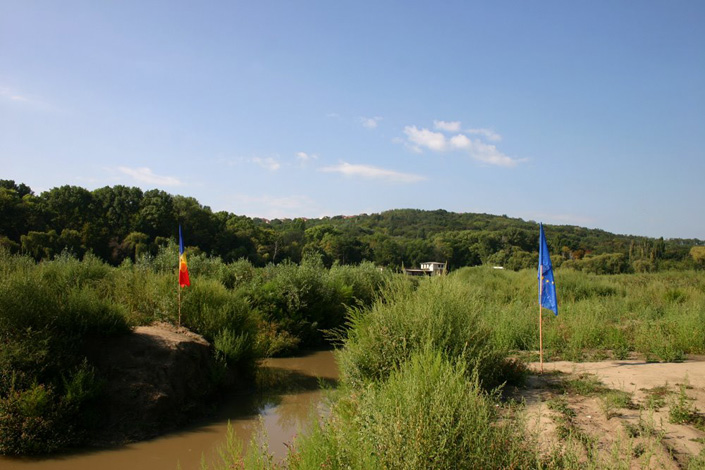
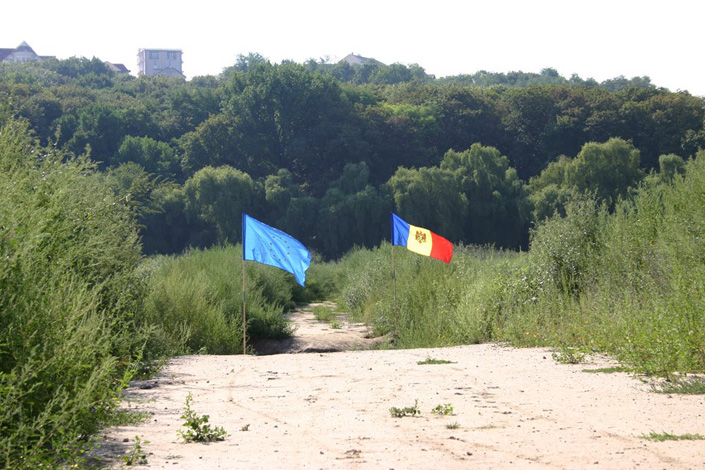
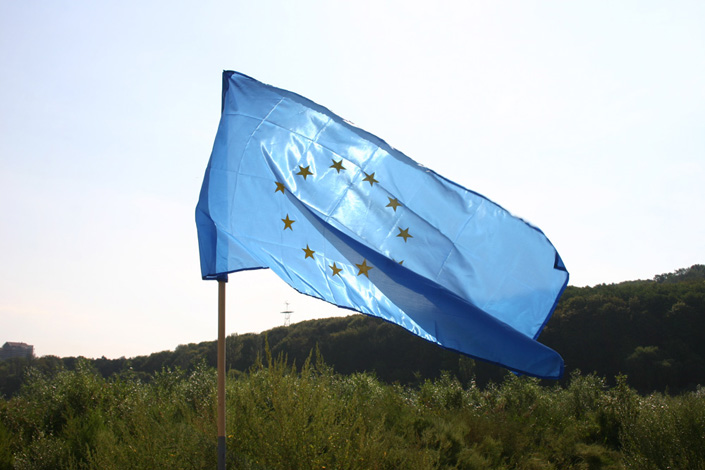
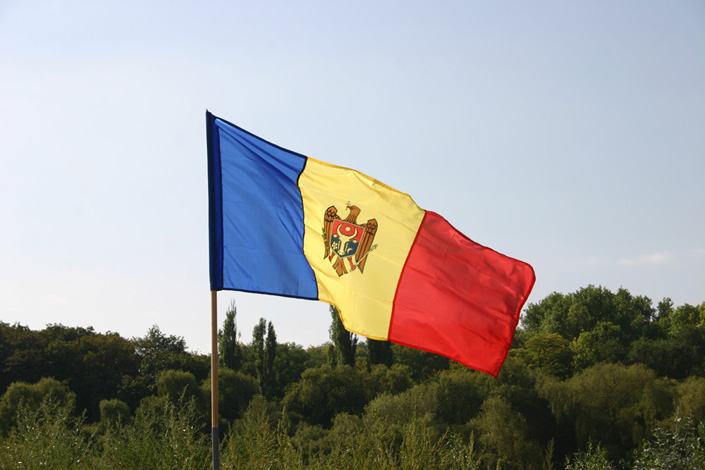
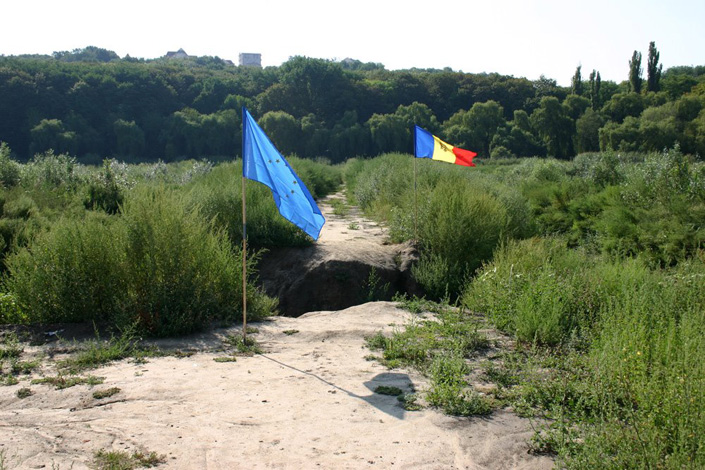
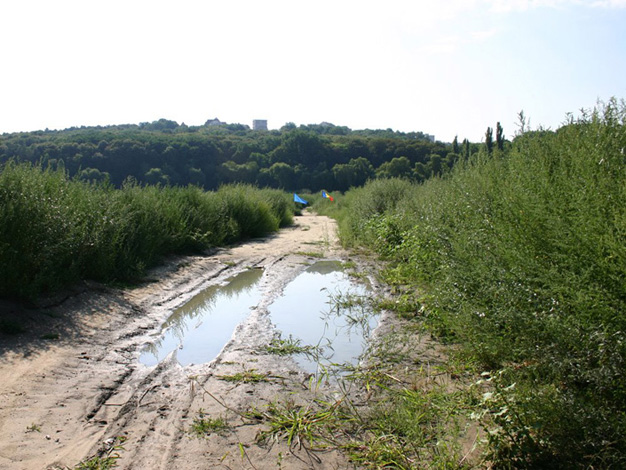
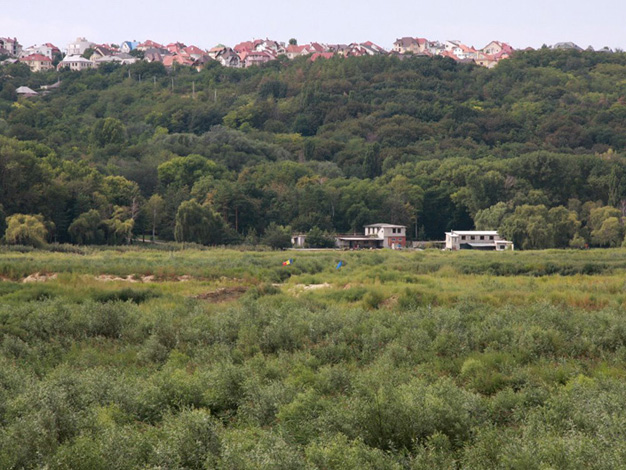
Steagul UE si steagul Republicii Moldova, doua catarge de lemn de 3,20 m x 8 cm, doua tevi din pvc 20 cm x 8 cm, montate si apoi abandonate de-o parte si de alta a micului rau care trece prin mijlocul lacului secat din parcul Valea Morilor, Chisinau, Republica Moldova. Lacul a fost secat in urma cu aproximativ doi ani de zile si se spune ca va fi locul in care se va ridica in viitor un complex rezidential.
Fiind construit la cererea lui Brejnev de catre membrii Comsomolului local (organizatia de tineret a Partidului Comunist al Uniunii Sovietice), lacul Valea Morilor este in prezent o intindere mare de arbusti in crestere, un peisaj scos in afara utilizarii curente si intr-un fel, in afara istoriei. Autori: Nicoleta Esinencu, Vlad Nanca, Mircea Nicolae. In cadrul Interventii3, proiect de arta in spatiul public din Chisinau, Moldova.
Flower Bridge
Public space intervention / in collaboration with Nicoleta Esinencu, esinencu.md
The flag of the European Union, the flag of the Republic of Moldova, two wooden poles 3,20 m x 8 cm, set up and abandoned on the banks of the small river that flows through the middle of the dry lake from the Valea Morilor Park, Chisinau, Republic of Moldova. The lake was emptied of water approximately two years ago, and it is said that it will be the place where a future residential complex will be built. The members of the local Comsomol (the youth organization of the Communist Party from the Soviet Union) built this lake at the request of Leonid Brezhnev. Nowadays the lake is a wasteland, full of bushes and small trees, a landscape out of use and in a way, out of history.
The Flower Bridge was created on the 6th of May 1990, within the “Flower bridge across the Prut river” action, organized by the “Association of free Romanians from across the globe”, the Popular Front from the Republic of Moldova and the Bucharest-Chisinau Cultural Association. This was a symbolic gesture celebrating the liberation of Romanians living in Moldova from the Soviet rule. It also pointed out the possibility of an eventual union between the Romanian state and the Republic of Moldova. Citizens of Romania and of the Republic of Moldova met on the left bank of the Prut river in the border crossing points of Miorcani-Pererita, Stanca-Costeşti, Sculeni-Sculeni, Ungheni-Ungheni, Albita-Leuşeni, Falciu-Stoianovca, Oancea-Cahul, Galati-Giurgiulesti. They celebrated this event by throwing hundreds of thousands of flowers into the waters of the river. A period of time in which the citizens of these two countries could travel across the border only with their IDs followed. This was discontinued when Romania entered the European Union. It was also the events that led to the apparition of the Transdniestria region as an independent state.
Today, the Flower Bridge no longer exists in the symbolic imagination of these two countries, and Romanian or Moldavian authorities never mention it. Rather than being nostalgic about a past state of affairs, this intervention highlights the process of creating symbolic objects with abstract existence by the nationalist discourse. Once they have lived their lives and served their purpose, they are silently withdrawn from the collective consciousness, thus becoming mental relics, as they are no longer kept alive by the ideology that brought them into existence.
Coroane funerare
Interventie in spatiul public
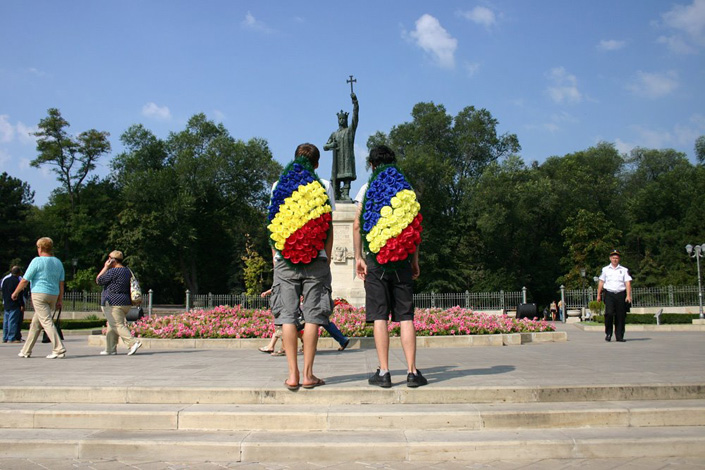
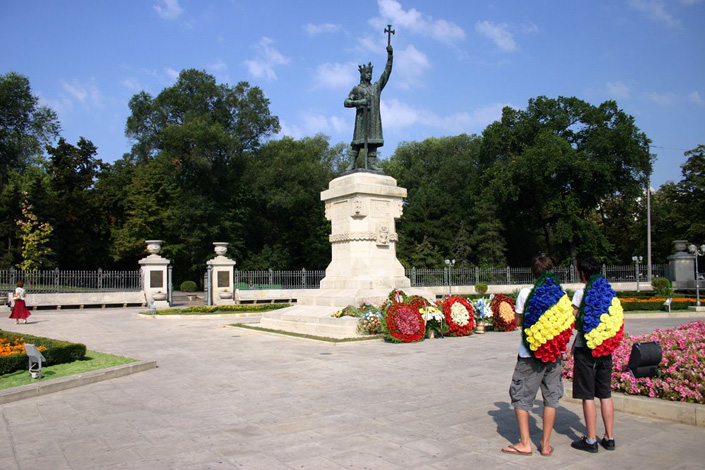
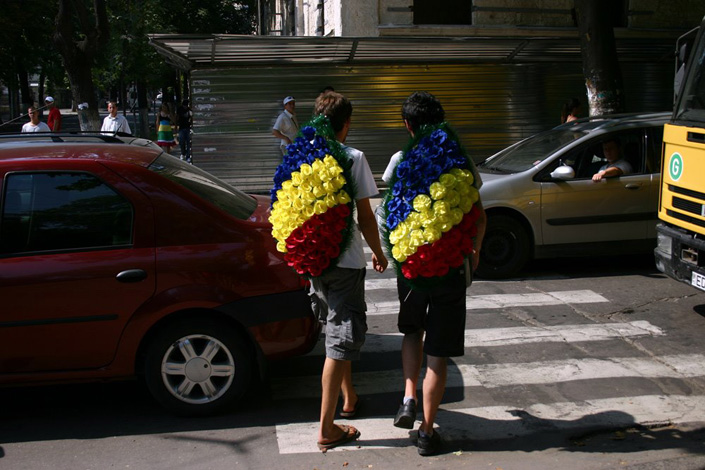
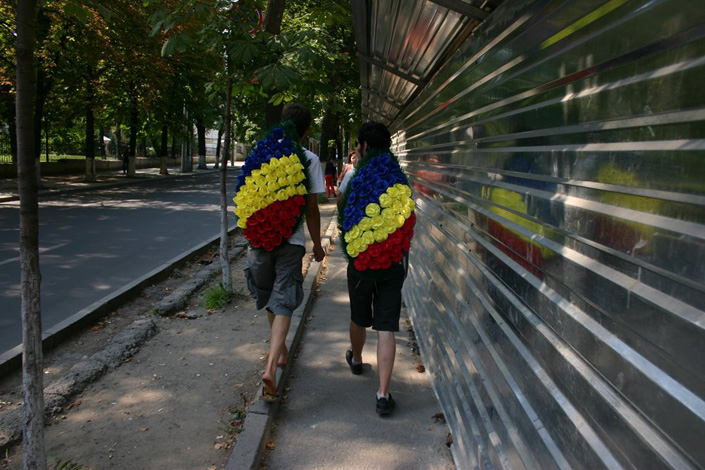
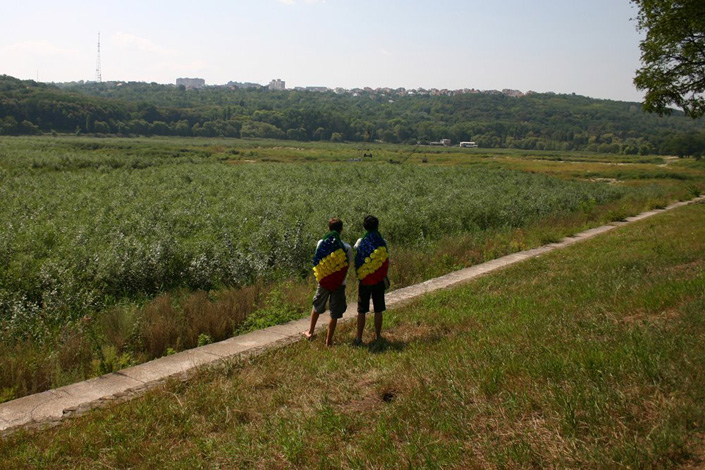
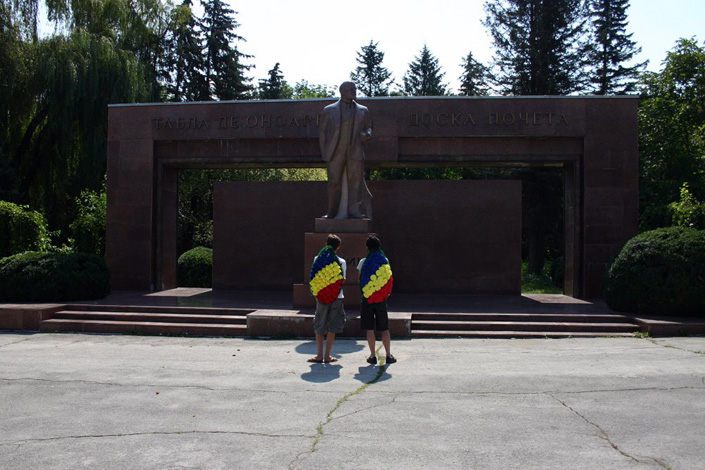
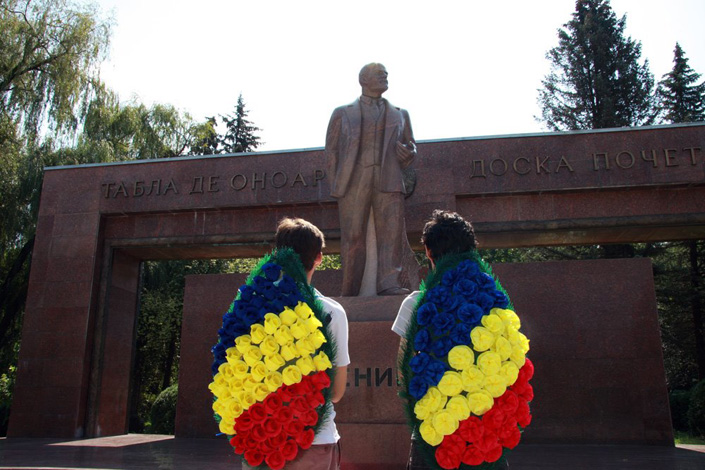
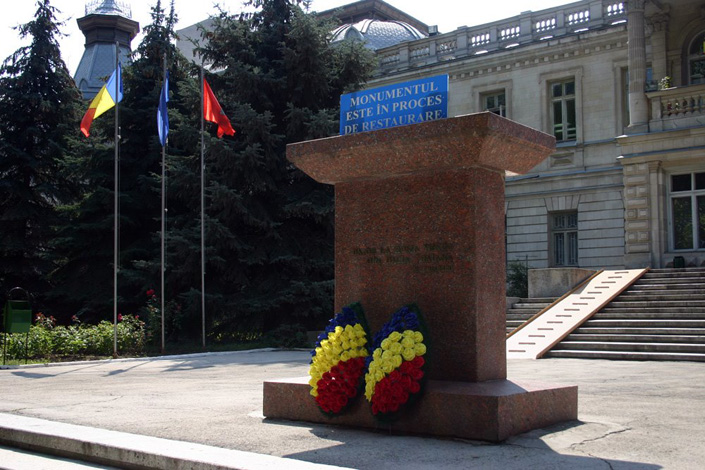
Doua coroane funerare (80 x 60 cm, flori de hartie albastre / galbene / rosii, sfoara de plastic) purtate pe post de rucsac intre statuia lui Stefan cel Mare din apropierea cladirii Guvernului Republicii Moldova, statuia lui Lenin din parcul Moldexpo si soclul unui monument in restaurare din fata Muzeului de Istorie din Chisinau, Republica Moldova. Autori: Vlad Nanca, Mircea Nicolae. In cadrul Interventii3, proiect de arta in spatiul public din Chisinau, Moldova.
Aceasta actiune reia in mod ironic gestul ceremonial de pelerinaj la locurile consacrate prin ridicarea de monumente statuare de for public. De asemenea se pune in discutie si gestul ritual de a depune flori in fata acestor monumente.
Intentia autorilor este de a sublinia caracterul construit al discursului vizual propriu acestui mijloc de comunicare prin care puterea politica modeleaza imaginarul colectiv al populatiei, setul de gesturi rituale pe care le implica, dar si presupusa adeziune a privitorului la un asemenea sistem predefinit de gesturi.
Prin purtarea coroanelor funerare tricolore ca niste backpackuri ale unor turisti potentiali, se creeaza astfel posibilitatea unui pelegrinaj ireverentios, care sa demonteze conventionalismul acestui comportament si sa puna sub semnul intrebarii valorile pe care aceste locuri de memorie le vehiculeaza.
E de notat aici faptul ca statuia lui Lenin din parcul Moldexpo a fost deplasata din locul ei original din fata cladirii Guvernului Moldovei, unde fusese se afla in perioada sovietica. De asemenea, e important de vazut si faptul ca statuia lui Stefan cel Mare a suferit o serie de deplasari, unele din ele datorate conflictului simbolic intre ideologia sovietica incarnata in statuia lui Lenin si cea nationalist-moldoveneasca.
Ultima locatie a performance-ului, monumentul in restaurare urmareste astfel sa clarifice urmatoarea observatie: monumentele de for public tind sa eternizeze niste simboluri si valori colective, ele fiind insa extrem de mobile si instabile in spatiul construit al orasului, fiind in continuu re-modelate si re-amplasate in functie de puterea politica si de mesajele ideologice pe care aceasta vrea sa le comunice populatiei.
Actiunea a avut loc la o zi dupa Ziua Independentei Republicii Moldova si la patru zile de la comemorarea eliberarii Moldovei de catre armata sovietica, moment in care aceste gesturi ceremoniale atingeau o cota maxima de frecventa in spatiul public. Toate fotografiile de Michele Bressan, in afara de ultima, care ii apartine lui Vlad Nanca.
Funeral Wreaths
Public space intervention
Two funeral wreaths (80 x 60 cm, blue / yellow / red paper flowers, plastic thread) worn as backpacks between the statue of Stephen the Great in the proximity of the Republic of Moldova Government building, Lenin’s statue from the Moldexpo Park and the empty pedestal of a monument that was being restored in front of the History Museum in Chisinau, Republic of Moldova.
This action makes an ironic re-evaluation of the ceremonial pilgrimage towards the places consecrated by public monuments. The authors also question the ritual gesture of placing flowers in front of these monuments. The overall intention is to underline the construct that lies behind the visual discourse specific to this means of communication through the use of which the political power shapes the collective consciousness of the population. The ritual set of gestures that these places imply, as well as the presumed adhesion of the viewer to this pre-defined set of gestures are also underlined. By wearing the funeral wreaths as backpacks of potential tourists, the possibility of an irreverent pilgrimage is created, one that can deconstruct the conventional gestures associated with this behavior, thus questioning the values that these places of memory communicate to the viewer.
It is important to point out the fact that Lenin’s statue from the Moldexpo Park was removed from its original location in front of the Republic of Moldova Government building, where it stood during the Soviet period. Also, the statue of Stephen the Great was installed in a series of successive locations. Some of the displacements were due to the symbolic conflict between Soviet ideology embodied in Lenin’s statue, and Moldavian nationalist ideology. The last location of this action – the empty pedestal of the monument that is currently being restored in front of the History Museum – underlines the following observation: public monuments aim at rendering eternal a set of chosen collective symbols and values, but the statues themselves are temporary, mobile and unstable within the built space of the city. They are also continuously re-shaped and re-placed by the political power and by its ideological messages that it wishes to communicate to the population.
The action took place one day after the Independence Day of the Republic of Moldova and four days after the commemoration of Moldavia’s liberation by the Soviet Army. This was a moment when these ceremonial gestures reached their highest frequency within public space.