Understading History
Sângele scurs din instalaţia istoriei este colorat după caz în roz sau alte culori fluorescente. Asta pentru că istoria e “cool” iar miturile sunt reciclabile ca iconuri vintage. Iar dacă Ceauşescu ar mai fi încă în viaţă ar fi pe coperta revistelor glossy fără să-şi impună acest lucru. Pentru că idolul-dictator a avut o viaţă cu excentricităţi de rockstar, ce fac din el un produs uşor de vândut, mai ales turiştilor străini.
Cultul lui Ceauşescu a fost creat prin controlul tuturor artelor dirijate dibaci într-o singură direcţie. Aşa se face că puterea imaginii lui Ceauşescu constituie o atracţie specială mai ales ca icon pop sinonim cu forţarea începuturilor civilzaţiei urbane moderne, “la bloc”. Paradoxul face ca reprezentarea oarecum obligatorie, altă dată, a lui Ceauşescu în toate artele, să fie acum o alegere deliberată a creativilor contemporani ce l-au transformat în stencil şi graffiti pe blocurile gri.
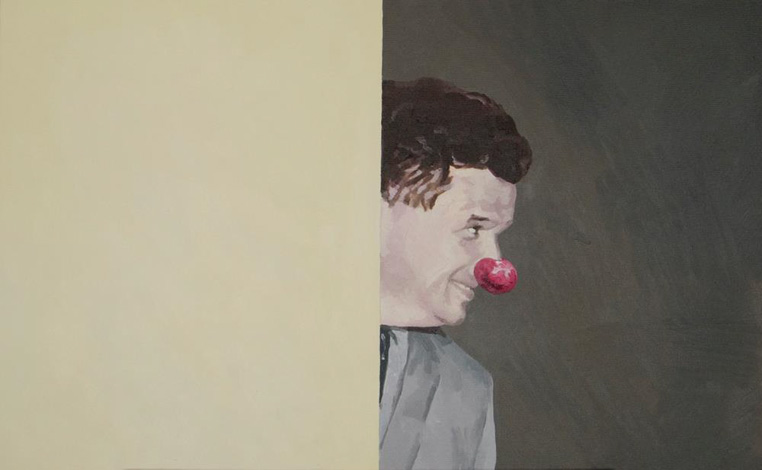
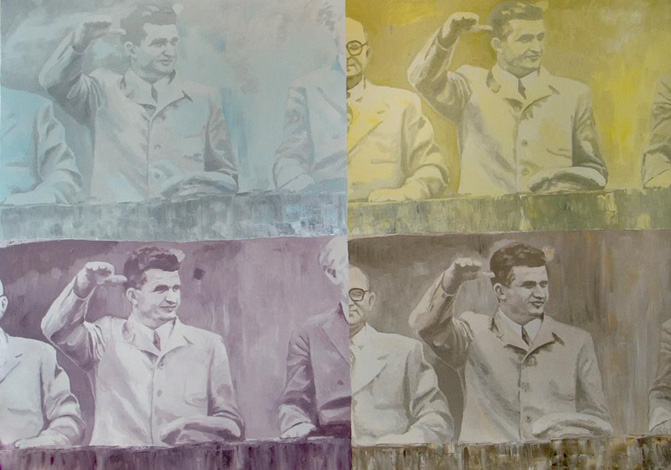
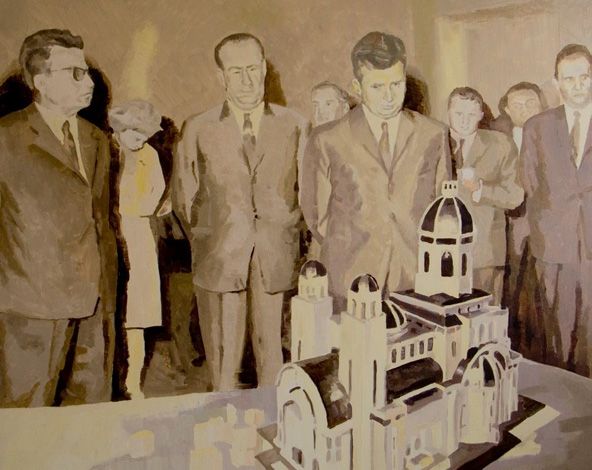
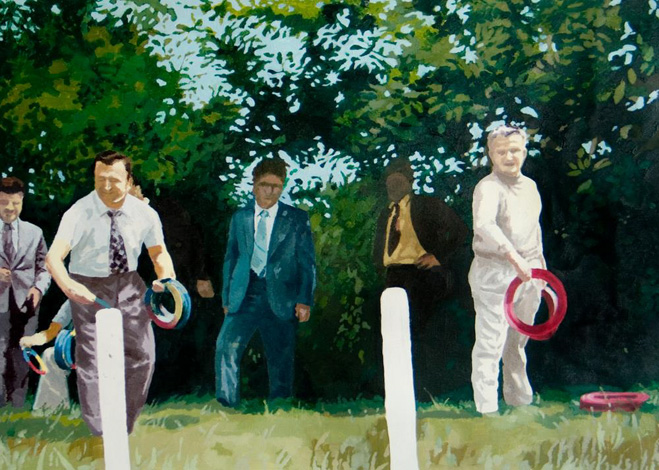
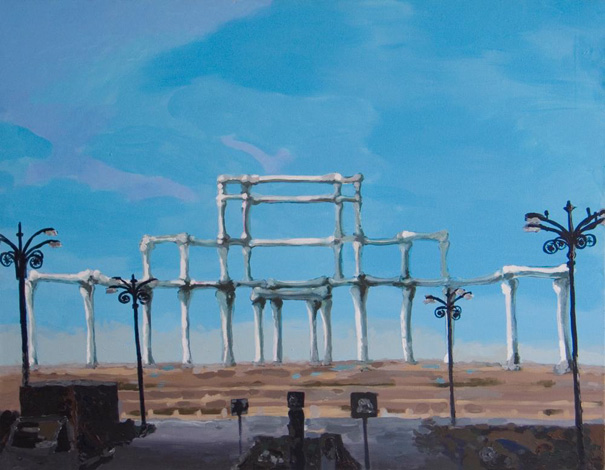
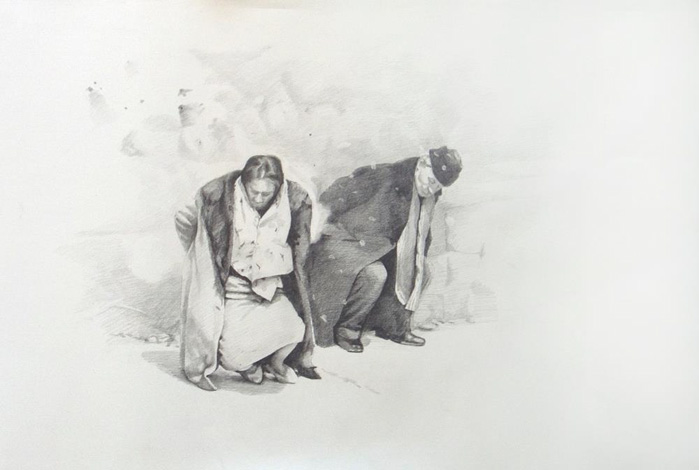
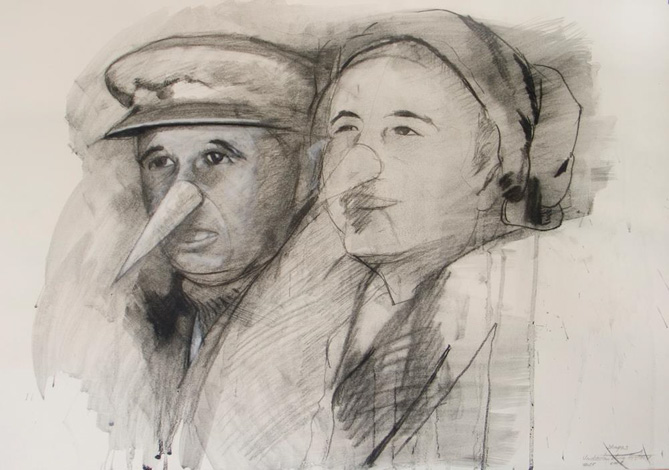
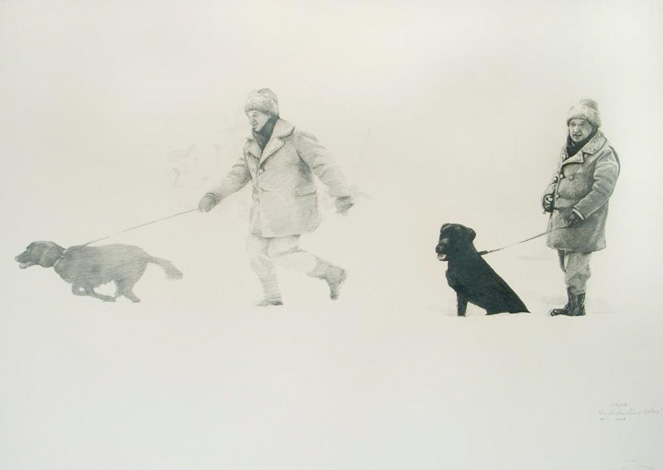
Dragoş Burlacu îl reprezintă pe Ceauşescu atît în ipostaza de Conducător Suprem căt şi în cea a omului atras de plăceri uneori costisitoare. Cadrele acestor realităţi trecute par fantastice. Compoziţiile în care Ceauşescu apare trăgând cu arcul ori cu puşca, pasionat de şah, de vînătoare, sau de scufundări, în vizite de lucru, ori la tribună gesticulând amplu sînt inspirate din imaginile “Epocii de Aur”.
Proiectul Understanding History a pornit după cum mărturiseşte artistul “de la o nevoie de a rememora istoria recentă a ţării şi implicit de a realiza conexiuni cu prezentul pentru a înţelege viitorul.“ Într-un fel sau într-altul prin interpretarea manipulatorie ori prin reproducerea ca atare a imaginilor familiei Ceauşescu, istoria este trecută printr-un filtru artistic. Imagini-cult încărcate cu ideologii funcţionează diferit în funcţie de contextul momentului istoric. Construirea unui mit prin cultul imaginii a fost apoi demitizată prin flashul bliţzurilor turiştilor. Iar dacă socialismul a fost un eşec cultul imaginii “Conducătorului Iubit” s-a consolidat într-un succes de produs capitalist cu caracteristici de gadget-vintage-glamour.
Întrepătrunderile realităţii cu adevărul şi ficţiunea în arta cu subiecte istorice ori politice depăşesc graniţele contextuale-angajate ale unor estetici relative, pentru a servi din plin mirajului mutaţiilor istorice, devenind un pasaj obligatoriu al întregii creaţii contemporane.
Cosmin Nasui, Understanding History
The blood drained from the installation history is coloured into pink or other fluorescent colors, as appropriate. Just because history is “cool” and the myths are recyclable as vintage icons. And if Ceausescu was still in life, he would be on the cover of the glossy magazines free to impose this. As the dictator-idol had a life with rock star eccentricities, wich make from himself an easy sold product, especially to foreign tourists.
Ceausescu’s cult was created by controlling all the arts skillfully directed into a sole direction. This is why the power of Ceausescu’s image is a special attraction as a pop on synonym with the forcing the beginnings of the modern urban civilization, “at the block”. The paradox makes the representation, some other time rather mandatory, of Ceausescu in all arts, be now a deliberate choice of the contemporary creative persons which have transformed him in stencil and graffiti on the grey block of flats.
Dragos Burlacu represents Ceausescu both in the hypostasis of a Supreme Leader and as the man sometimes attracted by expensive pleasures. The frames of these past realities seem fantastic. His compositions where Ceausescu appears firing a bow or a gun, a chess hunting, or diving enthusiast in working visits, or in Court widely gesturing are inspired from “The Golden Age ”.
The Understanding History project started, as the artist says “from the need to recall the recent history and implicitly to achieve connections with the present to understand the future”. In a way or another by the manipulator interpretation or by the reproductions such of the images of Ceausescu’s family, the history is passed through an artistic filter. Cult-images loaded with ideologies function differently according to the context of the historic moment. Building a myth by the image cult was the debunked by the tourists’ flash. And if the socialism was a failure, the image cult of “The Beloved Leader” was consolidated into a capitalist product success with gadget-vintage-glamour specifications.
The interpretations of the reality with the truth and fiction in the art with historic or political subjects overcome the contextual boundaries employed of certain relative aesthetics, to fully serve the charm of historical mutations, becoming a mandatory passage of the contemporary creation.
Cosmin Nasui , Understanding History